Guide · Updated 24 September 2026

This is how to hire a video production crew in Portugal without being there yourself.

Match the crew to what you need to receive, brief it by video call and ask for a quote that lists the crew, the equipment and the logistics separately. You only need to travel if you want to be on set.

By Daniel Lopes, founder of Beyond Focus · 3 min read

On this page
  1. Crew size
  2. The quote
  3. Day rates
  4. English
  5. From abroad
  6. Booking ahead
  7. Permits

Crew size

The size of the crew should follow what you need to receive.

One camera operator is enough for interviews, simple product shots and social content with little setup. A small crew covers most corporate videos: someone directing and filming, someone on sound and light, someone running the day. Brand films with several setups a day, actors or a second camera need more hands.

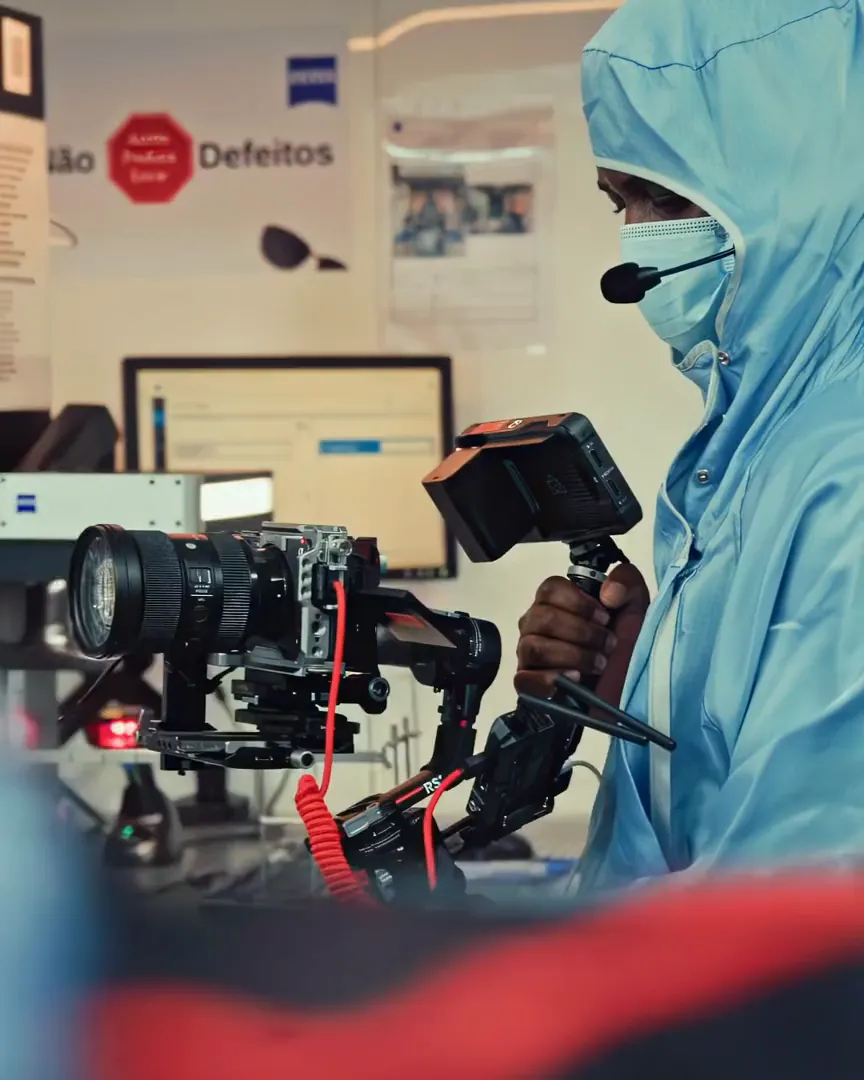
When we film, the core is our own team of three, Daniel Lopes, Pedro and Willen, and we add people when the shoot calls for it. The size of the crew is written into the proposal.

The quote

How much does it cost to hire a video crew in Portugal?

It depends on the size of the crew, the number of shoot days, the equipment and how much post-production you need. With us, videos start at €700, and the quote is fixed before you decide.

Ask for a quote that separates the crew, the equipment, the travel and the edit. A single figure is harder to compare and easier to change later.

Day rates

What is included in a typical day rate?

A day rate usually covers the person's time and their own basic kit. Lighting packages, extra cameras, drones, vehicles, studio hire and travel are often quoted separately, so ask what is in the price before you compare.

We quote per project. The equipment we own goes with us, and anything we rent is listed in the proposal.

English

Is it hard to find English-speaking crew in Portugal?

No. The people who direct, film, edit and produce in Portugal usually work in English, and many have worked with teams from abroad. Ask for one person on set who speaks English and makes the decisions with you.

With us, the whole project can run in English, from the brief to the review of each version.

From abroad

Do I need to be in Portugal to hire and brief a crew?

No. The brief happens by video call, the treatment and the shot list are approved in writing, and each version arrives online for your team to review. You only need to travel if you want to be on set.

  1. The first call

    What the video has to achieve, who it is for, where it will be seen and the deadline.

  2. The proposal

    What you receive, the crew, the calendar and the price, in writing.

  3. The treatment

    The idea and the look of the film, approved before anyone films.

  4. The shoot

    We film in Portugal, with or without your team on set.

  5. The review

    Each version in the Beyond Portal, where you comment on the exact second and approve with one click.

Booking ahead

How far in advance should I book a crew in Portugal?

Count back from your deadline. Most projects take 2 to 4 weeks from the brief to delivery, with 1 or 2 days of filming, and brand films and documentaries can take up to 8 weeks. Book as soon as the dates are fixed, especially if the shoot needs permits.

Permits

Do I need permits or insurance to film in Portugal?

Filming in public places usually needs a permit from the city council, and natural parks, heritage sites and private properties have their own rules. Drone flights need a licence and, in some areas, an extra authorisation. Agree in writing who takes care of each permit and which insurance covers the shoot.

We apply for the permits our shoots need, and we fly our own drone, with the licence to do it.

These are shoots our own team has covered.

“Following the shoot live allowed us to adjust shots in real time and raise the final result.”

João SilvaExpert Surfacing, Carl Zeiss Portugal · Rated 9.5 out of 10Translated from Portuguese.

Tell us what you need to film in Portugal, and when.

We reply within 24 hours on working days.